
Spoken vs Written Cantonese: Understanding the Differences Between Spoken vs Written Cantonese
Spoken Cantonese is the lively, expressive language used in daily conversation. Written Cantonese includes two forms: formal writing (based on Mandarin grammar) and informal writing (closer to how people actually speak). They differ in vocabulary, grammar, and usage, particularly when discussing spoken vs written Cantonese.
Understanding these differences is crucial for language learners. For instance, while spoken Cantonese may utilize local idioms that reflect cultural nuances, written Cantonese often skews toward a more standardized form that can feel detached from everyday speech. This disconnection can lead to misunderstandings, particularly for learners who might engage with written materials without a solid foundation in spoken language.
1. Why This Matters?
If you’re learning Cantonese or exploring Chinese linguistics, understanding the gap between speech and writing is essential. It can prevent confusion, especially when reading newspapers vs watching TV shows or texting friends.
Take, for example, the phrase ‘你食咗飯未呀?’ which translates to ‘Have you eaten yet?’ while in formal writing, the equivalent Mandarin phrase would be ‘你吃饭了吗?’. The informal version not only conveys the message but does so in a way that is deeply embedded in the culture and social interactions of Hong Kong. Such examples illustrate the vibrancy of spoken Cantonese and its integral role in daily life.
Understanding the differences between spoken vs written Cantonese can enhance your communication skills and cultural appreciation.
The Basics
Exploring the tonal nature of Cantonese adds depth to our understanding. The language is noted for its complexity in tones, where the same syllable can have different meanings based on its intonation. This rich tonal quality is often lost in written forms, highlighting the importance of auditory learning alongside reading.
This table encapsulates some key distinctions between spoken and written Cantonese and serves as a foundation for further exploration:
It’s important to note that the evolution of spoken Cantonese has also been influenced by historical factors, including colonialism and migration patterns. These factors have led to the incorporation of various foreign terms and slang into the language.
| Feature | Spoken Cantonese | Written Cantonese |
|---|---|---|
| Where it’s used | Daily conversation, TV, voice chat | Newspapers, books, websites, messages, lyrics |
| Grammar | Informal, flexible | Often formal (Mandarin-based) or phonetic (informal) |
| Vocabulary | Slang, local expressions | Standard Chinese OR Cantonese characters |
| Tone | Heavily tonal, expressive | Tones aren’t visible in characters |
| Character Use | May not have direct character form | Uses unique Cantonese characters or Mandarin ones |
2. What Is Spoken Cantonese?
Spoken Cantonese is what you hear in:
- Everyday conversation in Hong Kong
- TVB dramas and local YouTube channels
- Voice chats and street interviews
It’s rich with slang, idioms, and contractions. For example:
“你食咗飯未呀?” (nei5 sik6 zo2 faan6 mei6 aa3?)
= Have you eaten yet?
This is very common in speech, but not in formal writing.
3. What Is Written Cantonese?
There are two styles of written Cantonese:
(1) Formal Written Chinese
- Based on Mandarin grammar and vocabulary
- Used in official documents, news, and books
- Understandable across Chinese-speaking regions
- Example: 你今天吃飯了嗎?(standard Mandarin-style writing)
(2) Informal Written Cantonese
In formal writing, the use of standardized characters can make written Cantonese more accessible to non-native speakers or those less familiar with local slang, as it adheres more closely to Mandarin conventions.
- Tries to mirror how people speak
- Common in text messages, comics, pop culture
- Uses unique Cantonese characters, like 咩 (me1), 嘅 (ge3), 唔 (m4)
- Example: 你食咗飯未呀?(written exactly like it’s spoken)
4. Why the Big Difference?
The Cantonese writing system evolved under Mandarin’s shadow. So:
- Formal writing was standardized based on Mandarin
- Cantonese speakers adapted by writing phonetically or creatively
- Spoken Cantonese preserved local identity and richness that Mandarin lacks
Conversely, informal written Cantonese thrives in creative expressions found in social media and local literature. This allows for a playful engagement with the language that mirrors its spoken form, making it a dynamic tool for communication among younger generations.
5. Real-Life Example:
Spoken Cantonese:
佢唔嚟啦,佢話太攰。(keoi5 m4 lai4 laa1, keoi5 waa6 taai3 gui6.)
(He’s not coming. He said he’s too tired.)
Examples of these informal writings can be found in popular online forums and chats, where users often express themselves in ways that might not conform to traditional grammar rules but resonate well with the intended audience.
Understanding these dynamics not only aids learners in grasping the language but also enriches their cultural knowledge, as language is a reflection of societal values and identity.
Formal written:
他不來了,他說他太累了。(taa1 bat1 loi4 liu5, taa1 syut3 taa1 taai3 leoi6 liu5.)
Informal written Cantonese:
佢唔嚟啦,佢話太攰。(keoi5 m4 lai4 laa1, keoi5 waa6 taai3 gui6.)
6. Takeaway Tips for Learners
Takeaway lessons can also be drawn from these real-life examples, showcasing how fluency in spoken Cantonese can enable individuals to express emotions and ideas that might be lost in translation when using formal written styles.
- If you want to speak fluently, focus on spoken Cantonese and informal writing.
- If you’re reading newspapers or books, learn the formal written style (more Mandarin-based).
- To chat like a native, learn the slang and casual characters used online.
Understanding the spoken vs written split is key to mastering Cantonese. Don’t expect the written language to match the way people talk—especially in formal writing. But with practice, you’ll start to notice the patterns and cultural logic behind both styles.
FAQs
Q: Is written Cantonese the same as written Chinese?
A: Not exactly. Formal written Cantonese follows Mandarin grammar, while informal written Cantonese reflects speech and uses unique characters.
Q: Can I learn to speak Cantonese without learning to write it?
A: Yes—but knowing basic written forms will help, especially in texting or reading signs.
Q: Why is Cantonese so different from Mandarin in writing?
A: Cantonese preserves older linguistic forms and has developed its own spoken and informal written standards over time.
Want to talk with friends and family in Cantonese? Get started your spoken Cantonese learning today!
Premium Version: https://sherrychinese.etsy.com/listing/1769239358

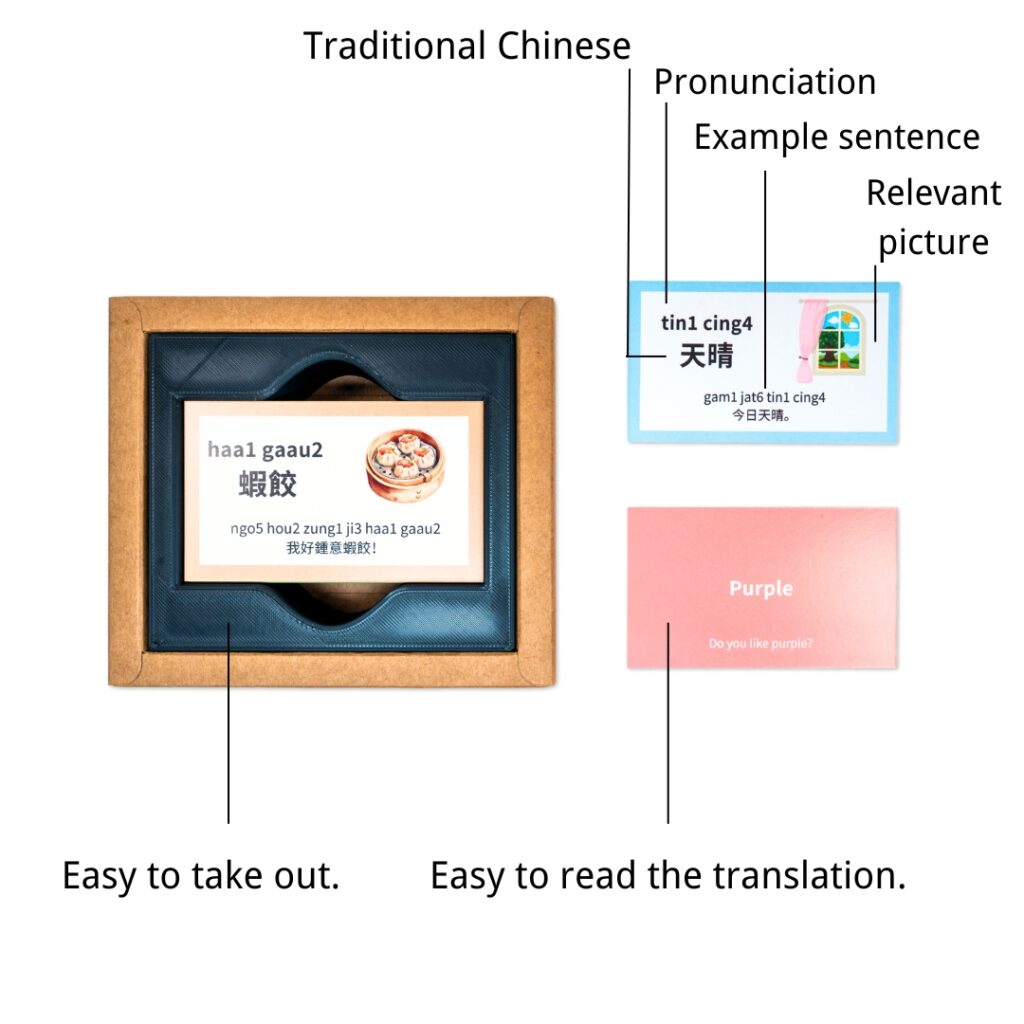


For learners, engaging with both forms of Cantonese can lead to a more holistic understanding of the language and its applications in various contexts, whether they be casual conversations or more formal written communications.
Waterproof
Waterproof Version

In conclusion, the journey to mastering spoken and written Cantonese requires patience and practice, as well as a willingness to embrace the unique characteristics that define each form. As learners navigate these differences, they build not only their language skills but also a deeper appreciation for the culture that shapes the language.